
The Kierra Initiatives are an interconnected response to transfemicide and anti-trans violence. Together, they create a protection-to-justice continuum: providing support to transpinays and their families, documenting and building evidence, strengthening community capacity, advancing policy and legislative change, and honoring those we have lost through collective remembrance and accountability.
Through these initiatives, Project Kierra seeks not only to respond to violence, but to build the knowledge, systems, and collective action needed to prevent transfemicide and create a safer future for transpinays.
Programs for Protection,
Learning, and Collective Action
Policy and Legislative Advocacy
Kierra Guided Protection System
The Kierra Guided Protection System (KGPS) provides transpinays experiencing violence, discrimination, or threats with an accessible and structured pathway to support. It includes risk assessment, safety planning, psychosocial support, accompaniment, referrals, and coordination with trusted partners, guided by the needs, safety, and consent of victim-survivors and their families.
Transfeminist Documentation and Justice Training
This initiative builds the capacity of transpinays leaders and allies to ethically document transfemicide and anti-trans violence. Through transfeminist political education, human rights training, documentation methodologies, and advocacy planning, Project Kierra strengthens local capacity to document cases and transform community knowledge into collective action for justice.
Transfemicide and Transgender-Based Violence Monitoring
Project Kierra documents and monitors transfemicide and anti-trans violence in the Philippines to build reliable evidence for advocacy, research, protection and policy reform. The initiative prioritizes ethical documentation, respect for the lived names and identities, and the privacy and dignity of victims, survivors, and their families.
Transgender Day of Remembrance
Project Kierra commemorates Transgender Day of Remembrance (TDOR) as a space to honor lives lost to violence while demanding justice and accountability. Through remembrance, community mobilization, protest, and collective action, we keep the lives of our fallen sisters visible and strengthen the call to #EndTransfemicide.
Programs for Protection,
Policy, and Legislative Advocacy
This initiative aims to create meaningful conversations on policy reform and legislative advocacy that will put transfemicide in policy language and recognize it as a form of gender-based violence that continues to affect our society and place transpinays at heightened risk of violence and discrimination.
The initiative also seeks to support communities, government institutions, policymakers, civil society organizations, and other stakeholders in understanding transfemicide through a human rights and transfeminist lens. Through research, dialogue, coalition-building, and policy engagement, Project Kierra works to strengthen recognition of transfemicide and encourage concrete institutional and legislative responses.
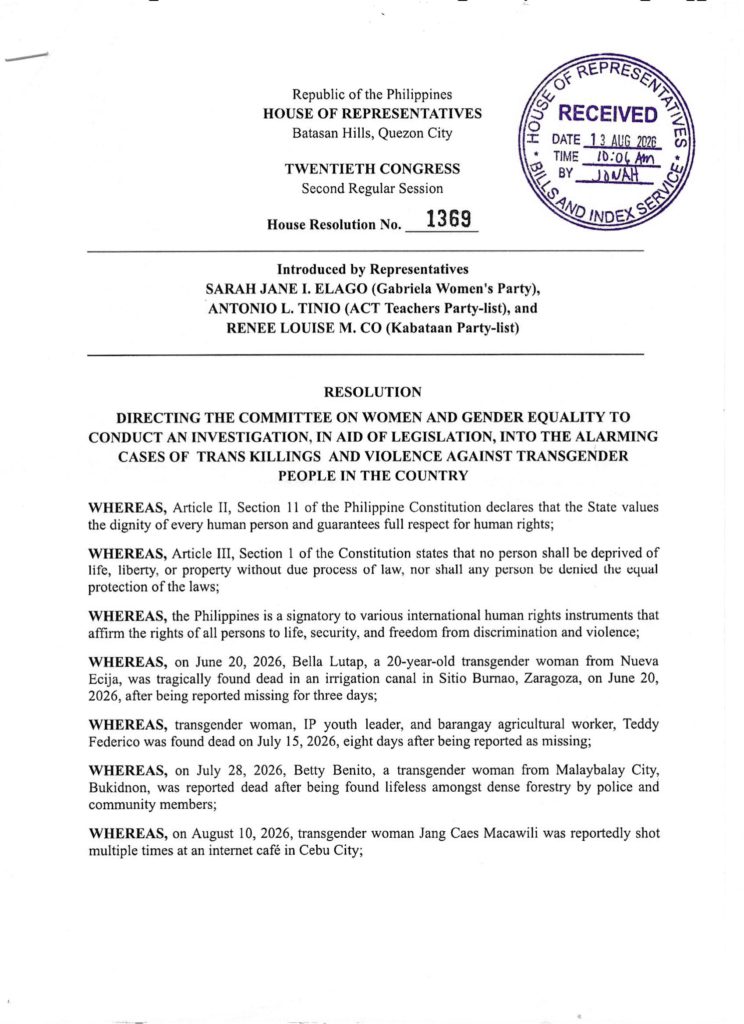
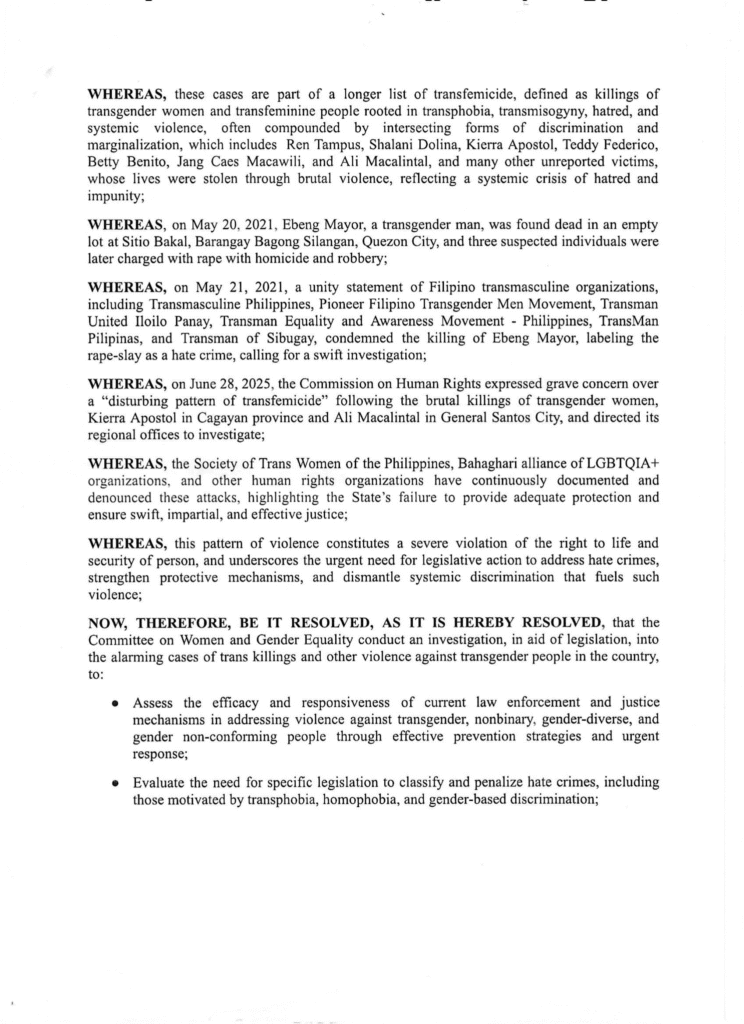
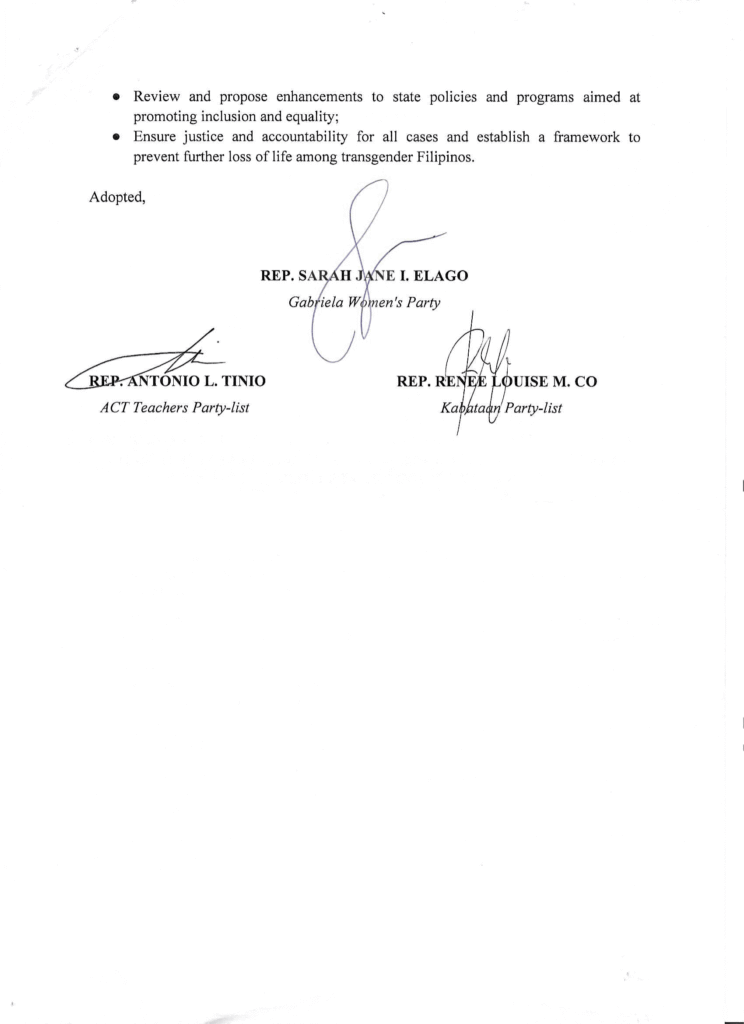
As part of this initiative, Project Kierra has facilitated stakeholder consultations; developed and supported a call for unity among organizations and individuals committed to ending transfemicide; maintained coordination with government institutions that have expressed interest in incorporating transfemicide into their work; developed a policy and research reference document; and supported STRAP in contributing to and co-filing House Resolution No. 1369, introduced by Gabriela Women’s Party, Kabataan Partylist, and ACT Teachers Party-list, calling for an investigation into transfemicide in aid of legislation.
Key Milestones:
- Conducted stakeholder consultations to build a shared understanding of transfemicide and identify possible policy and institutional responses.
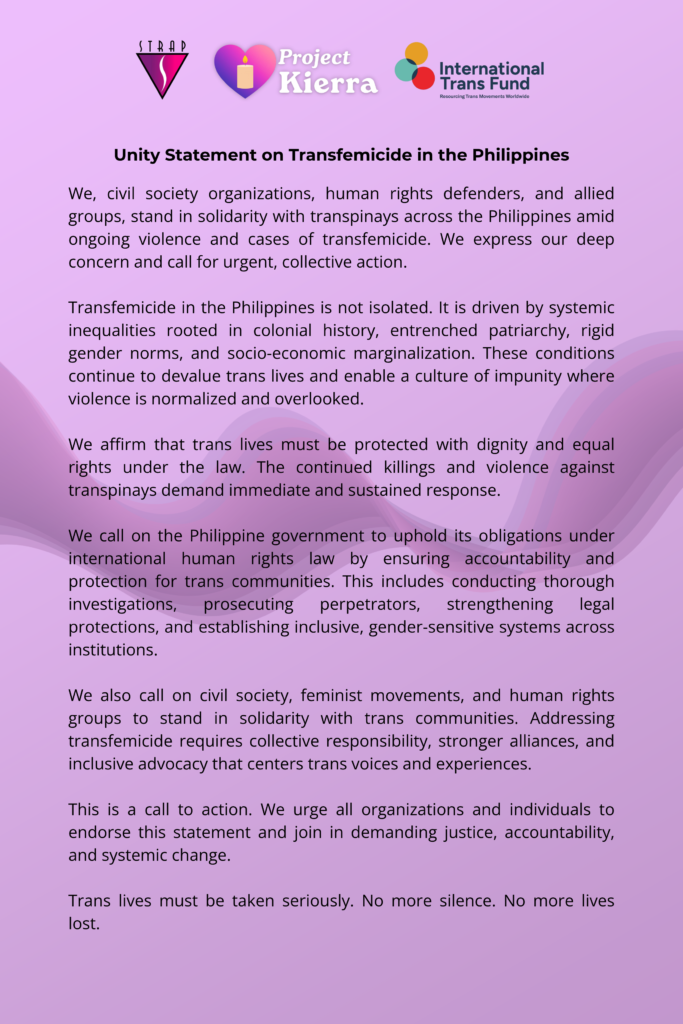
- Initiated and supported a call for unity among organizations, advocates, and individuals committed to ending transfemicide.
- Established and sustained coordination with government institutions, including the Commission on Human Rights and other stakeholders, to encourage the recognition of transfemicide in government work and policy discussions.
- Worked with legislators and advocacy partners toward legislative action on transfemicide. Supported STRAP’s contribution to and co-filing of House Resolution No. 1369.
- Developed the “Transfemicide in the Philippines: A Preliminary Academic, Media, and Policy Reference” as a resource for policymakers, advocates, researchers, media, and other stakeholders.
House Resolution No. 1369.
Kierra Guided
Protection System
Even before the establishment of the Kierra Guided Protection System (KGPS), STRAP had been supporting transpinays who experience discrimination, harassment, threats, and violence. Project Kierra formalizes and strengthens this existing practice by establishing a more accessible and structured process for transpinays and their families seeking assistance from STRAP.
The KGPS provides a guided help-seeking and protection process that includes intake and consent, risk assessment, safety and protection planning, psychosocial support, accompaniment, referrals, and other forms of assistance based on the needs, circumstances, and consent of the victim-survivor or family.
Through STRAP’s network of partners and service providers, victim-survivors and families may be referred to appropriate legal, psychosocial, mental health, human rights, and other support services. The system also allows STRAP to better assess cases, coordinate responses, and ensure that assistance is provided in an ethical, survivor-centered, and trans-affirming manner.
Transfeminist Documentation
and Justice Training
Project Kierra, together with Atty. Claire Padilla of EnGendeRights Inc., co-developed training modules to strengthen the capacity of transpinay leaders and allies to ethically document transfemicide and respond to anti-trans violence.
The training integrates feminist political education, LGBTQIA+ rights, United Nations human rights mechanisms, relevant Philippine laws and police reporting procedures, transfemicide documentation, documentation tasks and methodology, and advocacy and action planning to end transfemicide.
Through this initiative, Project Kierra has trained more than 40 transpinay leaders and allies across Luzon, Visayas, and Mindanao. The training remains open to individuals and organizations that wish to develop their capacity for ethical transfemicide documentation, support local documentation efforts, or integrate documentation into their broader transgender rights advocacy.
An important component of this initiative is the establishment of the Transfeminist Documentors Network, a voluntary network intended to strengthen regional collaboration, local documentation, knowledge-sharing, and collective advocacy to end transfemicide.
Training Modules
- Module 1: Feminist Political Education
- Module 2: Rights of Lesbian, Gay, Bisexual, Transgender, Intersex, Queer, Gender Diverse, and Gender Non-Conforming People (LGBTIQ+ People)
- Module 3: UN Human Rights Mechanisms Relevant To Trans Communities
- Module 4: Relevant National Laws, Police Reporting, Referral
- Module 5: Transfemicide Documentation, Tasking and Methodology
- Module 6: Advocacy and Action Planning to End Transfemicide
Transfemicide and Transgender-Based Violence Monitoring
This initiative, currently ongoing, strengthens Project Kierra’s documentation work by systematically collecting, documenting, monitoring, and archiving cases of transfemicide and anti-trans violence in the Philippines.
Reliable data, documentation, research, and reports are essential tools for informing advocacy, programming, institutional responses, and future policies and legislation. A structured monitoring system therefore helps ensure that policy proposals and interventions are grounded in actual cases and documented patterns of violence.
The monitoring initiative also places importance on the dignity and identity of victims and survivors. It affirms the lived names and gender identities of transpinay victims and survivors and seeks to ensure that documentation does not reproduce the misgendering, deadnaming, or erasure that transgender people often experience even after death.
The monitoring covers cases from 2025 to the present, while also archiving publicly available information on earlier cases to provide historical context and contribute to a longer-term understanding of violence against transpinays in the Philippines.
Transgender Day of Remembrance
Every year, the transgender community remembers our fallen sisters, siblings, and community members who have lost their lives to transphobia, gender-based violence, and other forms of anti-trans violence.
Through the commemoration of Transgender Day of Remembrance (TDOR), Project Kierra seeks to create a space not only for mourning but also for collective remembrance, solidarity, accountability, and action. The initiative recognizes that remembering those who were killed must also mean confronting the conditions that made their deaths possible and demanding concrete action to prevent further violence.
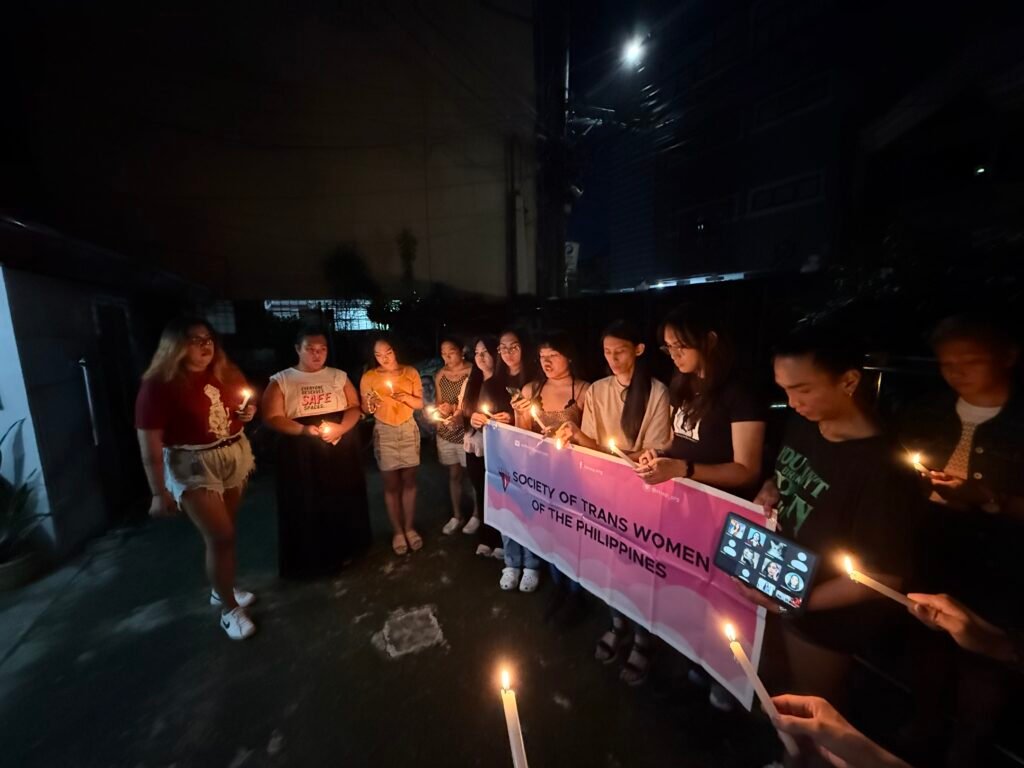
Project Kierra aims to lead a transpinay-centered commemoration through activities such as a protest rally, candlelight remembrance, and other community-led actions that honor the lives of those lost while amplifying the call to end transfemicide.
This initiative will continue as an annual platform for remembrance and advocacy, until transpinays can live without the threat of violence simply because they are transgender.